
 13 Oct 2026 · English

* I explore AI personalities, AI companions, and human–AI interaction through voice, memory, and boundaries. Practical design thinking for conversational AI. Believability is coherence, not deception.
Contact→Conversational AI is the interface. Personality is its pattern of behavior. Companion design adds continuity across visits, while human–AI interaction asks what people can understand and control. I examine how these parts work together without confusing believable behavior with human feelings.
A personality needs a stable center and room to adapt. I work on behavioral rules for voice, initiative, disagreement, and expression that can be implemented and tested beyond a persona prompt.
What should an AI remember, what should it forget, and how can someone correct the record? Memory design connects past conversations to the present without inventing shared history or treating retention as a goal in itself.
Companions raise questions that ordinary assistants can avoid: emotional tone, relationship state, expectations, and dependency. The goal is a consistent conversational experience with clear disclosure that the system is artificial.
I look for personality drift, contradictions, false memories, sycophancy, emotional overreach, and boundary failures. A character should remain recognizable when context, instructions, or the underlying model change.
Believability comes from the interaction of identity, expression, memory, relationship state, boundaries, and evaluation. No single prompt can carry the whole system.
These existing projects form the technical background for my work on AI personality. They illustrate source-grounded answers, user agency, conversational interfaces, and continuity. They are not presented as completed personality research.
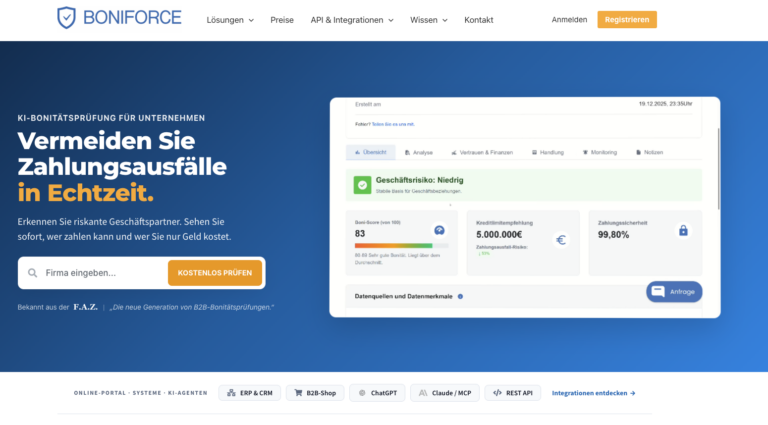
Boniforce applies AI to business credit assessment. It is a reminder that an AI system should explain its reasoning, surface supporting information, and leave consequential decisions with people.

SkillDiscs structures documents, videos, articles, and repositories into learning paths with an AI tutor. Its source-grounded answers show how conversational guidance can adapt to a learner without abandoning accuracy.
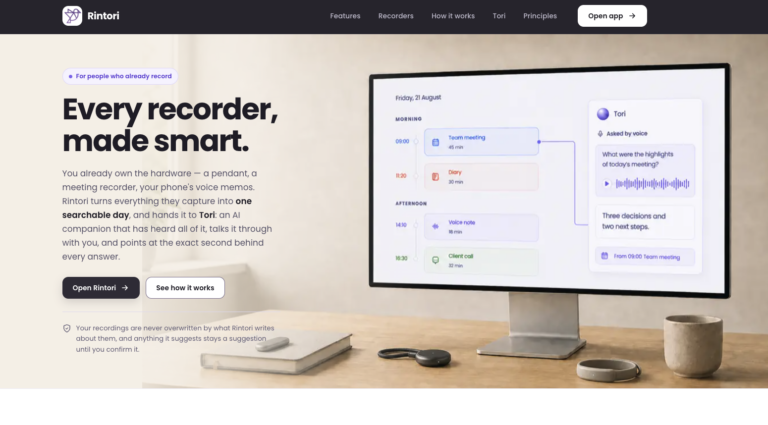
Rintori brings recordings into a personal timeline. Its companion, Tori, answers questions about that history and points back to the moment behind an answer. The design challenge is continuity without invented memories or actions taken without confirmation.

I started by building AI systems involving retrieval, agents, structured data, and evaluation. That led me to a harder question: what makes an artificial personality feel like the same recognizable presence from one conversation to the next?
Today I focus on personality, memory, companions, and responsible human–AI interaction. My earlier book, AIXec, documents the systems background behind that work. I do not believe believable AI needs to pretend it is human.

AIXec: Enterprise AI Implementation Done Right is my earlier book on the production discipline behind AI systems. Architecture, data, governance, and evaluation still matter when the interface becomes more personal. The book is context for my work, not an AI personality service.
13 Oct 2026 · English
 10 Oct 2026 · English
 2 Oct 2026 · English
Deutsches Archiv: KI-Agenten & Automatisierung · Modelle & Anbieter · Infrastruktur & Hardware · Gesellschaft & Ethik · Governance, Recht & Sicherheit · KI im Unternehmen · Forschung & Wissenschaft
How identity, memory, companions, and safety fit together.
It is the design and testing of an AI system’s conversational identity, behavior, memory, and adaptation over time. It treats personality as a system rather than a single prompt.
It remains recognizable while responding to context. Its voice, memory, motives, and boundaries support each other rather than changing unpredictably between replies.
No. The system should be transparent that it is artificial. Coherent behavior can make interaction easier without claiming human feelings or consciousness.
An assistant primarily helps complete tasks. A companion supports ongoing interaction, so memory, relationship continuity, disclosure, boundaries, and user welfare need particular care.
That depends on its purpose and the user’s choices. Memory should be relevant, reviewable, correctable, and capable of forgetting. A confident false memory can be more harmful than admitting uncertainty.
Yes. Use the contact page to describe the personality, memory, conversation, or safety question you are working through. You can share a question, an observation, or feedback on the work.
Start with the practical guide to AI personality engineering, then follow the writing as new field notes arrive.
Read the guide or visit the article hub. The older German archive remains available there too.
Email updates are in preparation; no subscription form is live yet.Let’s examine the personality, memory, conversation, and safety questions behind it. Send a question or share your experience.
Discuss your projectPrefer to read first? Explore the articles